About Cryogenic Cold Treatment
Since 1998, we are engaged in providing reliable and economical Cryogenic Cold Treatment across the regions. Our dexterous and diligent professionals coupled with ultra-modern equipment & machinery assist us to provide huge satisfaction our clients. Acknowledged for timely operation, high reliability and excellent finishing in work, customers can have the service for Cryogenic Cold Treatment at negotiable prices.
Characteristics:
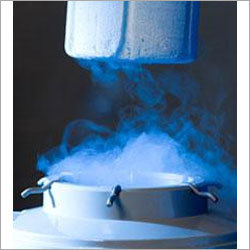
- Cryogenic cold treatment is a deep-freeze super-cold treatment at -300oF (-184oC) carried out on various tools dies and plenty of other engineering components.
- The treatment effects extraordinary improvement in performance. The service life of tools/components enhances by 100 - 400 % by this treatment.
- Cryogenic cold treatment is an one-time Surface-to-core treatment and its effect is not removed by repeated regrindings. It works like a coating but lasts after re-sharpening/re-grinding.
- The process causes complete transformation of retained austenite to martensite ensuring added strength.
- Cryogenic cold treatment produces the most stable microstructure in a metallic component, effecting extreme dimensional stability.
- No thermal shock is involved in the process.
- Cryogenic cold treatment also causes strengthening of molecular bond and fine metallurgical structure, effecting enhanced wear resistance, toughness and durability.
Applications:
-
H.S.S. Cutting tools, gears, carbide tools, shear blades, pistons, knives, gauges, dies, moulds, blades, punches, rollers, bearings etc.
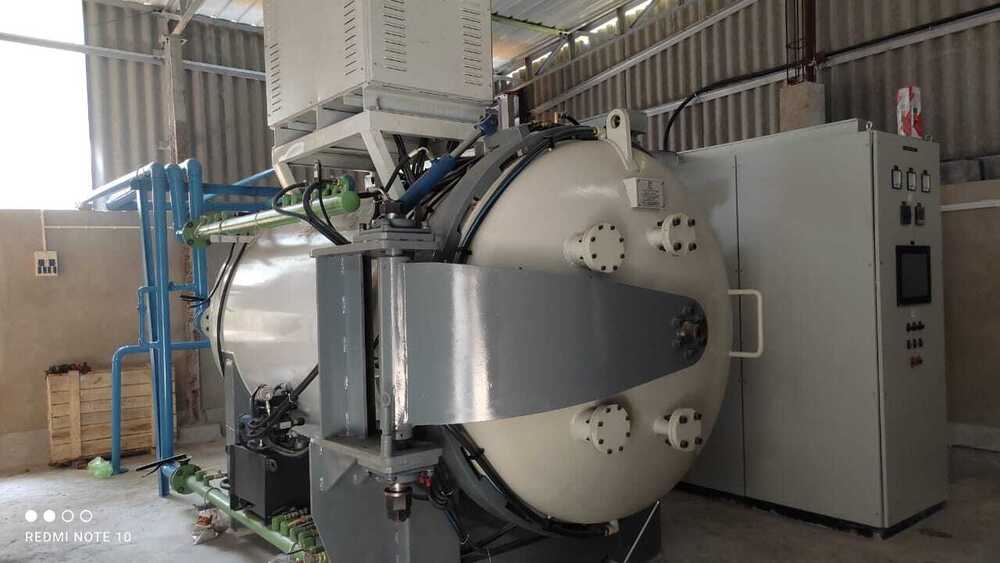
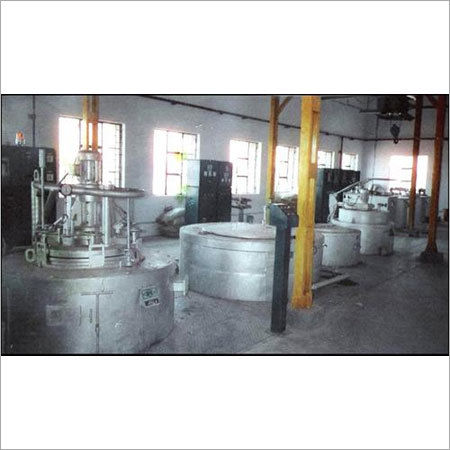
Unmatched Precision and ReliabilityOur cryogenic chambers feature state-of-the-art PLC automation and robust stainless steel construction, ensuring precise control over the entire treatment cycle. Customizable capacity allows us to accommodate diverse client requirements, from intricate tools to large aerospace components, while advanced data logging delivers transparent process monitoring.
Enhanced Metal PropertiesCryogenic cold treatment penetrates deep within metal structures, refining the grain and converting retained austenite. This results in increased wear resistance, dimensional stability, and durability, offering tangible improvements for automotive, tooling, and aerospace applications.
FAQs of Cryogenic Cold Treatment:
Q: How does cryogenic cold treatment enhance the properties of metals?
A: The process gradually lowers the temperature of metal components to between -130C and -196C, followed by soaking and a controlled return to ambient temperature. This transformation relieves internal stresses, refines the microstructure, and increases wear resistance, resulting in improved durability and stability.
Q: What materials can be treated using this cryogenic process?
A: This service is suitable for a wide range of metals, including steel, alloys, carbides, and cast iron. Both new and used components can benefit from enhanced performance after treatment.
Q: When is cryogenic treatment recommended for metal components?
A: Cryogenic cold treatment is recommended whenever improved longevity, resistance to wear, and dimensional stability are desired in metal parts, typically following initial heat treatment or before implementing into demanding applications in automotive, aerospace, or tooling industries.
Q: Where is the cryogenic cold treatment service available?
A: This service is offered across India, catering specifically to clients in the automotive, tooling, aerospace, and general metal manufacturing sectors. Customization based on client requirements is available for diverse industry needs.
Q: What is the process involved in cryogenic cold treatment?
A: The treatment process is fully automated and PLC-controlled, featuring slow cooling to ultra-low temperatures, extended soaking periods, and a gradual return to room temperature. Data logging ensures precise tracking of each stage and treatment parameters.
Q: How long does each cryogenic treatment cycle take?
A: The typical duration for a complete cold treatment cycle ranges from 24 to 36 hours, depending on component size, material type, and client specifications.
Q: What benefits does data logging provide during the cryogenic process?
A: Data logging enables comprehensive monitoring and recording of process parameters, improving quality assurance, repeatability, and traceability for each treated component.




 Send Inquiry

 Send Inquiry
 Send Inquiry
 Send SMS